The AGE Program is an institutional healthcare platform focused on adult genetic epilepsy, connecting patients, researchers and healthcare professionals through accessible medical information, research initiatives and clinical resources.
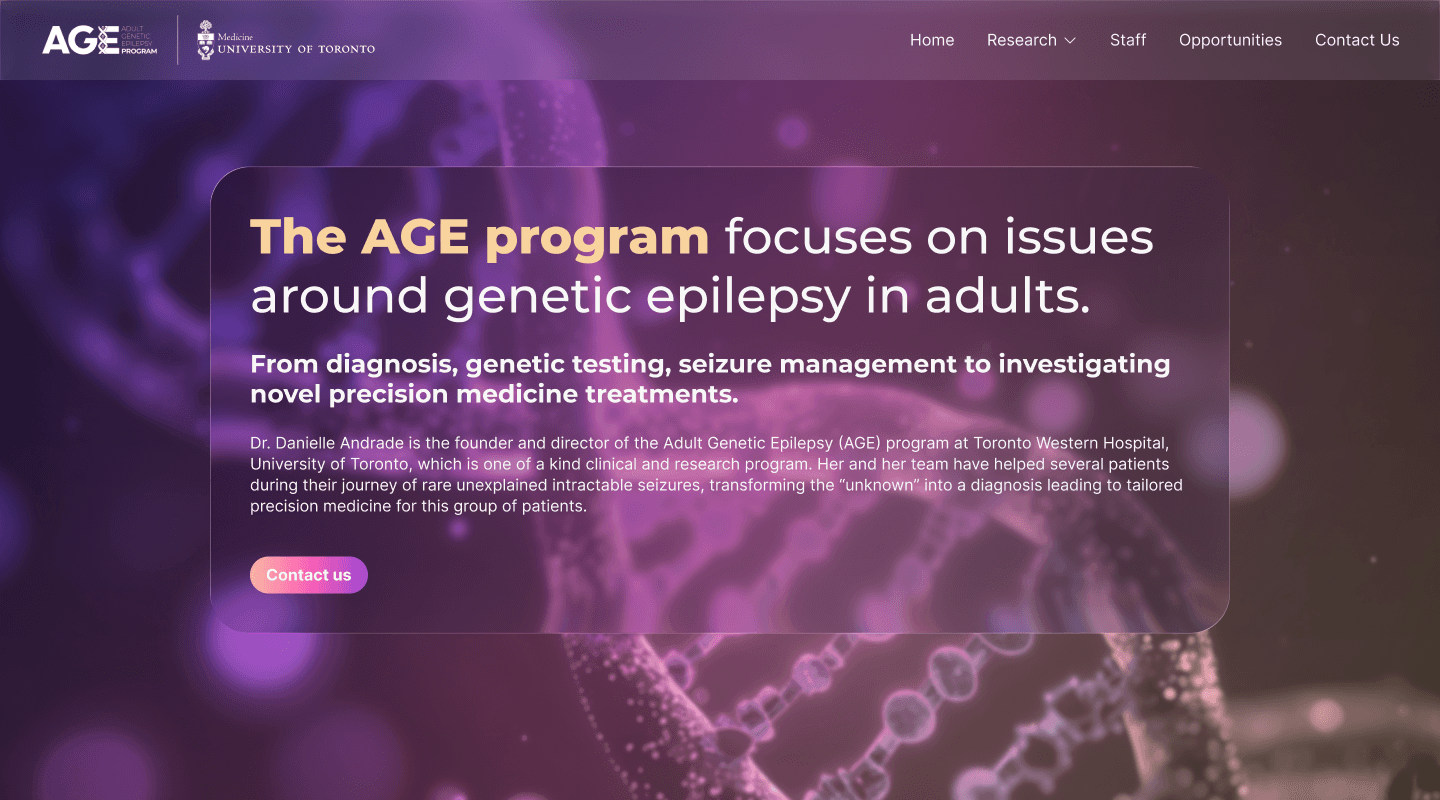
This redesign project aimed to modernize the digital experience by improving usability, information hierarchy and content organization, creating a clearer and more trustworthy interface for navigating complex healthcare and research content.
Role: UX/UI Designer, Product Designer
Scope: UX/UI Design · Visual Redesign · Information Architecture · Content Hierarchy
Tools: Figma
Platform: Web
Understanding the Existing Experience
The original landing page contained valuable institutional and medical information, but the experience felt visually outdated and difficult to scan efficiently.
Because the page contains a large amount of content related to research, staff, clinical information and partnerships, improving structure and readability became the main focus of the redesign.
Key Issues Identified:
Weak visual hierarchy between sections
Large blocks of text with limited scannability
Inconsistent spacing and component structure
Limited visual emphasis on important content
Low perceived modernity and institutional credibility
Navigation flow that felt visually fragmented

Redesign Goals
The redesign aimed to improve both the visual experience and the usability of the platform while preserving the original institutional content structure.
The main objective was to create a clearer and more trustworthy experience capable of helping users navigate complex medical and research information more efficiently.
Design Goals
Improve Information Hierarchy
Make content easier to scan and prioritize.
Increase Perceived Credibility
Create a more professional and modern institutional experience.
Improve Content Organization
Structure dense information into more digestible sections.
Enhance User Engagement
Create a more visually immersive and dynamic interface.
Standardize Components
Improve consistency across cards, typography, spacing and actions.

Before & After
The redesign preserved the original content and institutional structure while transforming the overall experience into a more modern, organized and user-centered interface.
The new version focuses on:
Better readability
Stronger visual hierarchy
Improved content organization
Greater visual consistency
More engaging navigation flow
The result is an experience that feels significantly more approachable, professional and easier to navigate.
Before
After
Final Reflection
This project reinforced how visual redesign is not only about aesthetics, but also about improving usability, perception and clarity.
By reorganizing information architecture, improving hierarchy and standardizing components, the experience became easier to navigate and more aligned with modern digital product expectations.
The redesign demonstrates how thoughtful UX and UI decisions can significantly improve the way users perceive and interact with institutional healthcare platforms.